From Collapse to Calling: Jack Kuzmin’s ECMO and Transplant Journey

For nearly a decade, Jack Kuzmin lived under the weight of a heart that was slowly failing him. First diagnosed in 2015 with advanced heart failure caused by hypertrophic cardiomyopathy and Wolff-Parkinson-White syndrome, Jack endured years of declining health. What began with an already low ejection fraction of 25% steadily worsened, dropping to just 5–10% by early summer 2025. With each passing year came more hospital stays, more complications and fewer moments of normalcy.
“It wasn’t just my health that declined,” Jack shared. “My energy, my spirit — everything faded. It felt like a constant dark cloud hanging over our family.”
That cloud followed him everywhere — until the night it nearly took his life.
In June 2025, while performing a stand-up comedy routine in downtown Pensacola, Jack went into ventricular tachycardia on stage. His defibrillator fired repeatedly as he collapsed mid-performance. Disoriented and critically ill, Jack made the fateful decision to drive himself to the hospital. He never made it inside.
Jack collapsed on the sidewalk outside the hospital, where two strangers, Edd and Nancy Villar, noticed him and rushed to help. They turned him over, attempted to wake him and quickly realized his heart had stopped. As Edd later told him, Jack died right there in front of him. Without hesitation, they began lifesaving resuscitation efforts and called for help, continuing until medical staff arrived.
“If not for those two angels,” Jack said, “I would surely be dead.”
Inside the hospital, Jack was revived and stabilized, but his heart was too damaged to sustain him on its own. As his condition continued to deteriorate, the care team acted quickly. Two days after he was admitted, Jack was placed on ECMO in the cardiac catheterization lab at Baptist Hospital by interventional cardiologist, Luther Carter, M.D., FACC, FSCAI, providing critical cardiac and circulatory support and giving him a chance to fight for his life.
The following day, Jack was transferred to Vanderbilt University Medical Center for advanced care and evaluation for a heart transplant. ECMO provided the bridge he needed — sustaining him while a donor heart was identified.
Weeks later, Jack received the ultimate gift: a heart transplant at Vanderbilt.
The journey didn’t end with the transplant — but it transformed everything that followed.
After ECMO and transplantation, Jack awoke to a new reality: a second chance at life. Recovery brought challenges, but it also brought profound gratitude. For the first time in years, he could take a deep breath without pain. He could feel strength returning. Ordinary moments suddenly felt extraordinary.
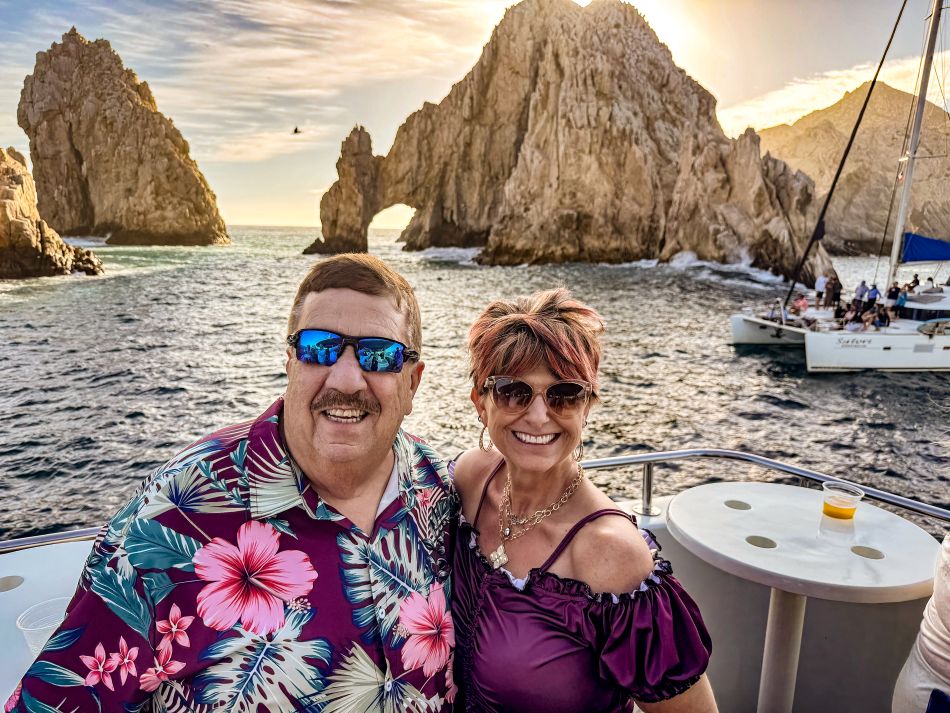
“I’ve learned to appreciate things I never noticed before,” Jack said. “The smiles on children’s faces. The love from my beautiful wife. The companionship of good friends. I love every minute of my life.”
Faith became Jack’s anchor through it all. His connection with God deepened in ways he never imagined, giving meaning to the suffering and strength to keep moving forward.
“My relationship with God is stronger than I ever thought possible,” he said.
Throughout his journey, Jack was never alone. His wife remained by his side through every hospital stay, setback and victory. His children gave him purpose and motivation to fight for his life. His mother, extended family and friends — along with thousands of people offering prayers and messages of encouragement — surrounded him with enduing support.
Jack also credits the healthcare professionals at Baptist Hospital and Vanderbilt University Medical Center for saving his life.
“They provided care selflessly, expertly and graciously,” he said. “They performed miracles.”
Today, Jack lives with a renewed sense of purpose — no longer defined by illness, but by gratitude, faith and the belief that his life was spared for a reason. His story is one of resilience, compassion and the extraordinary impact of ECMO, advanced medical care and human kindness — from skilled clinicians to strangers who refused to walk past a man in need.
Above all, Jack is grateful — for a new heart, for a second chance and for the life he almost lost, now fully reclaimed.