
Caring for Your Physical and Mental Health After a Hurricane
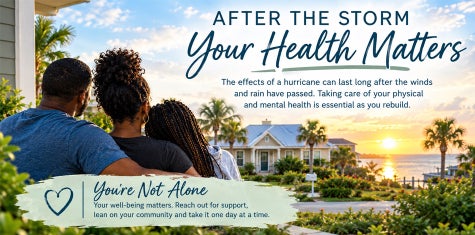
When a hurricane passes, the physical damage is often easy to see. What may be less visible are the emotional and physical effects that can linger long after the storm has moved on. Recovery takes time, and taking care of yourself is just as important as restoring your home and daily routine.
Prioritize Your Physical Well-Being
The days following a hurricane can be physically demanding. Cleanup efforts, disrupted schedules and limited access to services can take a toll on your health.
Stay Hydrated and Nourished
Even as life begins returning to normal, it's important to drink plenty of water and eat balanced meals. Physical labor, heat and stress can quickly lead to fatigue and dehydration.
Pace Yourself During Cleanup
Storm recovery is often a marathon, not a sprint. Take frequent breaks, lift carefully and avoid overexertion. If you have a chronic health condition, speak with your health care provider before participating in strenuous cleanup activities.
Protect Yourself from Hazards
Wear gloves, sturdy shoes and protective clothing when clearing debris. Be mindful of downed power lines, floodwater contamination and fallen trees. Seek immediate medical attention if you experience an injury or signs of illness.
Resume Healthy Routines
As circumstances allow, return to regular sleep schedules, physical activity and medical appointments. Routine can play an important role in both physical and emotional recovery.
Care for Your Mental and Emotional Health
Experiencing a hurricane can be stressful, even when the worst has passed. Feelings of anxiety, frustration, sadness or exhaustion are common and normal reactions.
Give Yourself Grace
Recovery looks different for everyone. It's okay to feel overwhelmed by the challenges that come with rebuilding and getting back to normal.
Stay Connected
Reach out to family, friends, neighbors and coworkers. Connecting with others can provide comfort, support and a sense of community during difficult times.
Take Breaks from Constant Updates
While staying informed is important, continuously following storm recovery news and social media can increase stress. Consider limiting your exposure and focusing on the information most relevant to your situation.
Watch for Signs of Emotional Distress
If feelings of anxiety, fear or sadness persist or interfere with daily activities, consider talking with a health care professional. Seeking support is a sign of strength and an important step toward healing.
Support Children Through Recovery
Children often process disasters differently than adults. They may have questions, worries or changes in behavior after a storm.
Parents and caregivers can help by having children:
- Maintain routines when possible.
- Encourage open conversations about feelings.
- Offer reassurance and age-appropriate information.
- Limit exposure to distressing news coverage.
Recovery Is a Community Effort
One of the most powerful aspects of recovery is the way communities come together. Neighbors help neighbors. Families support one another. Local organizations, businesses and health care providers work alongside first responders and utility crews to restore essential services and strengthen the community.
At Baptist Health Care, we are proud to serve a community defined by resilience, compassion and perseverance. Whether you are cleaning up your yard, checking on a loved one or simply taking time to recharge, remember that caring for your health is an important part of the recovery process.
Community Resources:
Lakeview Mental Health Mobile Response Team
Mobile Response Team | Lakeview Center
Escambia County
MyEscambia Home
Santa Rosa County
Santa Rosa County, FL | Official Website